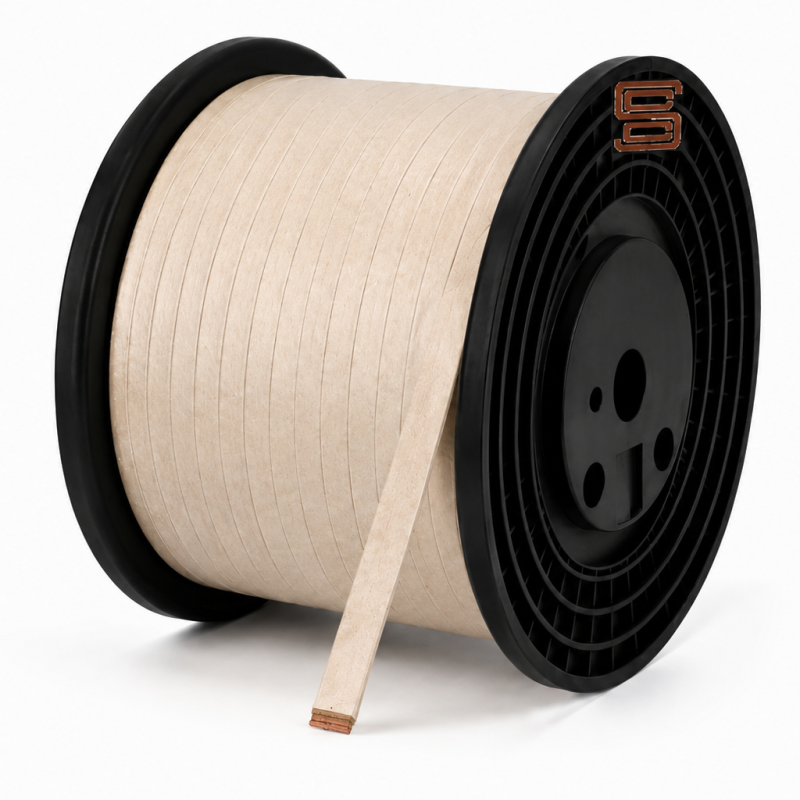
Paper Insulated Covered Conductor (PICC)
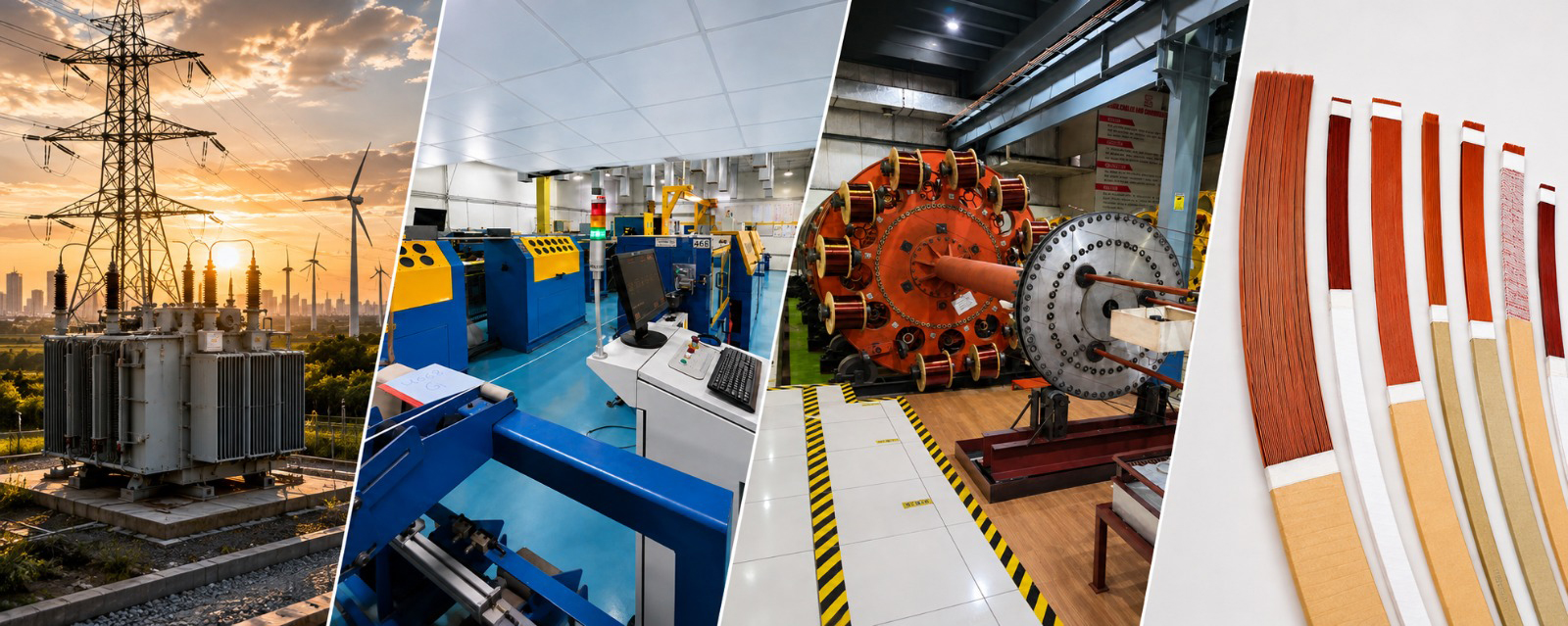
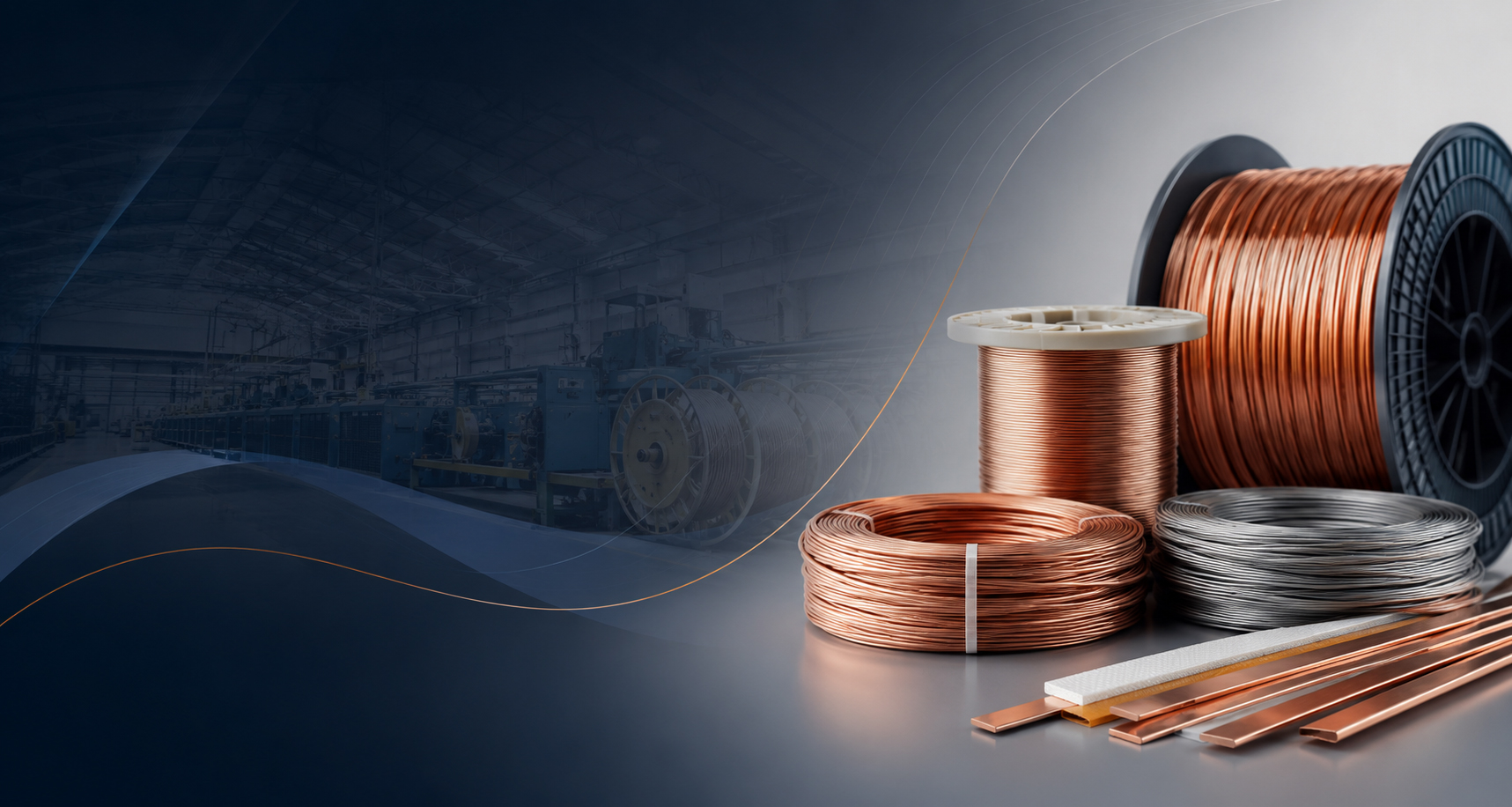
SCC manufactures a wide range of insulated copper conductors including paper insulated, enamel insulated, Nomex insulated, mica/polyester film insulated and double glass lapped copper conductors. Conductors are supplied as flat, round, bunched, glued bunched or customised assemblies based on application requirements.
Overview
Product Types
- Paper Insulated Copper Conductors
- Flat and round
- Insulation up to 40 layers
- Transformer applications
- Enamel Insulated Copper Conductors
- Flat and round
- Uniform enamel coating
- Suitable for winding applications
- Double Glass Lapped Copper Conductors
- Mechanical protection
- High insulation integrity
- Nomex Insulated Conductors
- High thermal class applications
- Transformer and specialty winding use
- Mica / Polyester Film Insulated Conductors
- Electrical and thermal insulation
- Application-specific covering
- Twin / Triple / Quadruple Bunched Conductors
- For customer-specific winding designs
- Glued Bunched Conductors
- For controlled conductor grouping and assembly integrity
The above categories are supported by the SCC presentation’s insulated conductor list.
Insulation Materials
| Insulation Material | Recommended Thickness | Typical Use |
|---|---|---|
| Kraft natural paper | 0.065–0.080 mm | General purpose |
| Calendered Kraft Paper | 0.110–0.140 mm | High density and dielectric strength |
| Calendered Crepe Paper | 0.075–0.130 mm | Inner and outermost layers |
| Thermally Upgraded Paper | 0.055–0.075 mm | High thermal properties |
| Epoxy Coated Kraft Paper | 0.080–0.130 mm | Bonding and reducing bulging effect |
| Aramid Paper / Nomex | 0.050 mm | Thermal class 200 |
| Polyester Film | 0.050 mm | Gas transformers |
| Glass Tape | 0.012–0.20 mm | External protection |
| Prepreg Paper | 0.10–0.40 mm | Interleaving layer |
These insulation types, recommended thicknesses and applications are given in the CTC brochure.
“Every insulation system is selected to match the transformer design, thermal class, dielectric requirement and winding process.”